Short circuit and other electrical faults in the car
The main problems in car electrical systems
A modern car is a complex organism where electronics control everything: from engine starting to climate control. And when a fault occurs in this extensive network of hundreds of meters of wires, it can paralyze even the most reliable car. It's logical to start understanding electrical problems with the basics. In this first article in the series, we will cover three fundamental faults: short circuits, grounding problems, and circuit overloads. You will learn why they occur, how they manifest themselves and what can be done to eliminate them.
Short circuit: the main “enemy” of wiring
A short circuit (SC) is a direct connection of the phase and neutral wires (or “plus” and “ground” in a car) without a load. Simply put, the current finds a short and easy path, bypassing consumers (lamps, motors, sensors). This leads to a sharp jump in current strength, overheating and, as a result, fire or destruction of the wiring.
Main reasons
- Insulation damage: Wires rub against sharp edges of the body, fray, and “tan” from time and heat.
- Broken wires: Exposed wires may come into contact with the body or each other.
- Incorrect device connection: Errors when installing a radio, LED backlight or other equipment yourself.
- Flooding: Water getting into connectors and electronic components (often after washing the engine or rain).
Typical signs
- Instant and repeated blowing of the same fuse. This is the main symptom!
- Local heating, melting or carbonization of wire insulation.
- Failure of one or more electrical systems (for example, headlights or heated glass do not work).
- A burning smell in the cabin or under the hood.
How to eliminate (action algorithm)
- Turn off the power to the car. Disconnect the negative terminal from the battery. This is rule No. 1 when working with electrical equipment.
- Find the problem fuse. Using the manual, determine which circuit the blown fuse is responsible for.
- Visual inspection. Carefully check all wiring in this circuit. Look for abrasions, melting, and signs of oxidation. Particular attention is paid to the places where the harnesses pass through the body openings (usually protected by rubber corrugations).
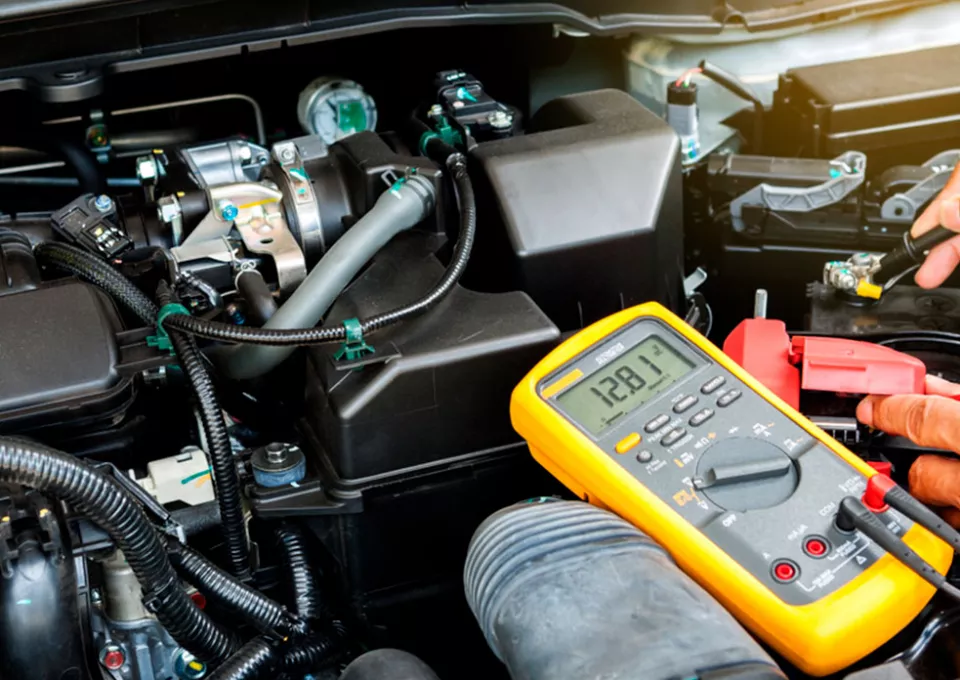
- Use a multimeter. In resistance measurement mode, “ring” the circuit. The resistance between the wire and the “ground” (body) in a working circuit should be very high (open). If the multimeter shows a resistance close to zero, you have found a short circuit.
- Repair the damage. Replace the damaged section of the wire or restore the insulation using high-quality heat shrink. Regular electrical tape in a car is a temporary solution!
- Check your work. Install a new rated fuse, connect the battery and test the system.
Important. If you cannot find the short circuit on your own, or you are not confident in your skills - contact Auto Expert specialists. Finding a “floating” short circuit often requires experience and in-depth knowledge of the circuitry of a particular vehicle.
Grounding problems
Most electrical circuits in a car are closed not through a separate “negative” wire, but through the body of the car. To do this, all the main elements are connected to the metal with special grounding buses. If the contact at these points is poor, the circuit becomes defective, causing many strange problems.
Main reasons
- Corrosion and oxidation. Moisture and reagents from roads destroy the contact between the terminal and the body.
- Loose fastening. A vibrating car can unscrew the ground bolt.
- Poor factory processing. Sometimes the contact point is poorly cleaned or coated with paint.
Typical signs (very insidious and can “float”)
- Flickering or dim light from headlights or dashboard when the load increases (turning on the heater, power windows).
- Spontaneous operation of sensors and instruments (arrows “jump”).
- Problems starting the engine: the starter turns sluggishly or simply clicks.
- Malfunctions of electronic control units (ECUs), for example, spontaneous opening of the central lock.
How to fix
- Find grounding points. The main ones are usually located on the body near the battery, on the engine and gearbox.
- Disassemble the connection. Unscrew the bolt and remove the terminal.
- Clean contact surfaces. Use a wire brush and sandpaper to polish both the terminal and the area on the body/engine.
- Degrease and protect. Wipe the surfaces and, for prevention, apply a special conductive lubricant (not Litol!).
- Tighten securely. Assemble the connection and tighten the bolt well.
Important. If you encounter problems with the electrical equipment of your car and you can’t find the reason, our specialists are always ready to help. We will conduct a professional computer diagnostics, we will accurately find the source of the malfunction and carry out reliable repairs.
Circuit overload
Overload occurs when the total power of consumers included in the circuit exceeds its design capacity. The wires and contacts begin to heat up, which leads to the destruction of the insulation and, ultimately, to a short circuit.
Main reasons
- Installation of inappropriate equipment. For example, connecting a powerful subwoofer or additional headlights with standard thin wires.
- Consumer failure. A jammed power window or fan motor begins to consume current several times higher than the rated one.
- Using bugs instead of fuses. This is a gross violation that deprives the circuit of protection.
Typical signs
- Regular, but not instantaneous, fuse blowing in the same circuit.
- Heating and melting of the insulation of wires going to a specific consumer.
- Unstable operation of powerful equipment.
How to fix
- Eliminate the cause of the overload. Disconnect all non-standard devices on the problematic circuit.
- Check the consumer. Is the motor or lamp causing the problem good? Replace if necessary.
- Check the wire cross-section. To connect powerful equipment, be sure to lay separate wiring with a fuse; the cross-section of the wire must correspond to the load.
- Never install a fuse of a higher rating “so as not to burn out.” This is a surefire path to fire. The fuse is rated to protect a specific wiring.
Important. Auto electrical repair by Auto Expert specialists - this is a guaranteed saving of your time, money and nerves. We have professional diagnostic equipment that allows us to quickly and accurately localize a problem, even such an insidious one as a “floating” short circuit or a failure in the CAN bus. Our technicians will not only eliminate the symptom, but also find the root cause of the breakdown so that it does not recur in the near future.
Short circuit, poor grounding and overload are the three pillars on which most automotive electrical problems rest. Understanding these principles will help you correctly describe the symptoms to a specialist or even solve this unpleasant problem yourself. And by entrusting repairs to Auto Expert, you get a fully serviceable car and confidence in its reliability.